Quick mobile auto glass repair that seals the damage, improves appearance, and keeps the process simple from quote to finish.
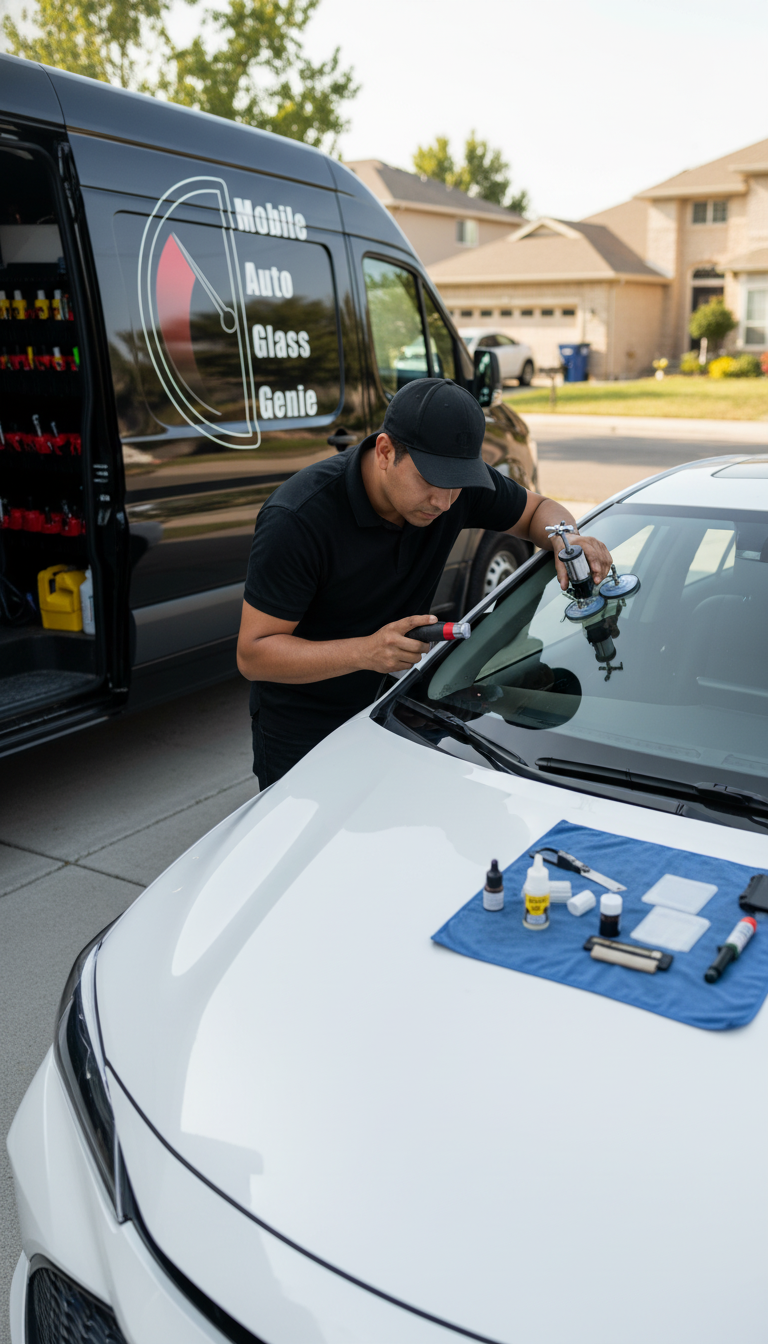
Auto glass repair fills fracture channels with clear resin to help slow spreading, seal out moisture and debris, and improve appearance in repairable cases. Mobile Auto Glass Genie performs auto glass repair using controlled resin injection with professional bridge injector tools and UV curing. Technicians inspect impact depth, crack length, edge distance, driver viewing area, camera and sensor viewing areas when present, and moisture or dirt contamination to confirm the damage qualifies for repair before work begins.
Auto glass repair restores optical clarity and supports structural integrity after impact damage. A technician injects a clear resin into the damaged area to help stop spreading, then cures and finishes the surface for a smoother result.
Damage type, size, depth, and location determine whether repair is appropriate. The items below describe common repairable damage patterns we inspect and repair.
A rock chip is a small impact break caused by road debris. Fast inspection helps reduce moisture and dirt contamination inside the break.
A bullseye chip is a circular impact pattern that can often respond well to resin filling. Results depend on depth and how clean the break is at the time of repair.
A star break has short radiating lines from the impact point. Repair focuses on filling the break pattern and sealing the area from moisture.
A combination break mixes multiple patterns in one impact area. Repairability depends on how the patterns connect and how close the damage is to higher stress zones.
A surface pit is a shallow mark on the outer surface of the glass. We inspect to confirm whether it is only surface level or connected to a deeper break.
Some small cracks may qualify for repair based on length, location, and depth. An inspection is required to confirm safety and repairability.
Repairability is confirmed by inspection before work begins. The criteria below are used to evaluate safety, visibility, and the quality of the repair outcome.
Smaller damage typically has a higher repair success rate. Longer cracks require careful evaluation to confirm they remain within safe repairable limits.
Location matters for stress concentration and visibility. Edge proximity and critical viewing areas require stricter inspection standards.
A repair is most effective when the broken structure can be filled properly. Deep inner layer involvement can reduce repair quality and may affect safety decisions.
Contamination can reduce bonding and clarity. Faster scheduling often improves outcomes because damage is less likely to be contaminated.
Visibility is assessed as part of the inspection. If a repair would leave a visibility issue, we explain the findings and the safest next step.
When vehicles have cameras or sensors near the windshield, the viewing area needs careful review. Inspection confirms whether the repair is appropriate for safe operation.
The repair process is designed to fill the break, seal it from moisture, and improve the finished appearance. Steps vary slightly based on damage type and repair conditions.
We inspect the break, confirm repairability, and explain what results to expect. Only then does the repair begin.
The damaged area is cleared of dirt, moisture, and loose glass fragments so the resin bonds properly. This helps improve clarity and finish quality.
A specialized tool helps remove trapped air and fill the break with clear resin. Proper filling improves the seal and supports appearance improvement.
UV light hardens the resin and bonds it to the glass. Curing time depends on repair conditions and the break structure.
Excess resin is removed, and the surface is polished to restore smoothness.
We perform a final inspection for finish quality, smoothness, and sealing. You receive clear guidance on what to expect after the repair.
Quality depends on materials, process control, and inspection discipline. Repairs are completed with a focus on clean bonding, smooth finishing, and consistent results.
We use professional grade repair resin selected for repair conditions and damage type. Tools are used to support complete filling and consistent curing.
The repair aims to improve visibility compared to untreated damage. Some faint visibility can remain depending on the original impact and contamination.
A primary objective is sealing the damaged area to help prevent moisture and dirt from entering the break. Sealing helps reduce spreading risk in repairable cases.
We verify surface smoothness and finish quality in the repaired area. A clean finish supports appearance and reduces distraction.
Ask about workmanship warranty coverage details when scheduling. Warranty terms can vary based on the damage type and inspection findings.
Most repairs are completed within a single appointment. Timing depends on damage type, contamination, and curing conditions.
A standard repair often takes about 30 to 60 minutes after repairability is confirmed. We confirm the expected appointment time after inspection.
Chip type, crack length within repairable limits, moisture removal needs, trapped air inside the break, access to the glass in your vehicle, and the number of repairs on the vehicle can affect total time.
Call now to schedule an inspection and get a clear answer on repairability. Text a photo for quick review and the fastest quote path.
Call now for a quote